


Humectants vs. Emollients vs. Occlusives: Which is Best for Your Skin?
Published Feb 18, 2026

When our skin feels dry, tight, or flaky, we rely on our moisturizers to save the day. Sometimes, they may work their magic. Other times, maybe not so much. It doesn’t mean that the moisturizer is bad; it may be formulated to do something different than what your skin needs.
To get the most from your moisturizers, it’s essential to understand that “moisturizing” isn’t a single action. Different ingredients will work in different ways. Some pull water into the skin, others smooth texture, and others prevent that much-needed hydration from evaporating.
These actions fall into three hydration categories: humectants, emollients, and occlusives. Understanding what each one does makes it much easier to find the products that work best for each skin concern (and the ones you’ll want to skip).
Humectants bring water in
Think of humectants as water magnets. Unlike emollients that work from the outside, humectants draw moisture into the skin and hold onto it tightly to help it look plump and feel more hydrated. Hyaluronic acid, glycerin, and propylene glycol are perfect examples of gold-standard humectants.
These ingredients are great for all skin types, but dry, mature, and acne-prone skin can especially benefit from their hydration-boosting powers.
Emollients smooth and soften
If you’re dealing with flaky, rough, or dull skin, reach for emollients. These ingredients contain lipids to soften the skin from the outside by moisturizing the skin’s surface and protecting its barrier. Common emollients include ceramides, plant oils, squalane, and butters like jojoba oil and shea butter.
Most moisturizers are formulated with both emollients and humectants to supercharge the benefits, with humectants attracting moisture and emollients protecting the barrier so hydration doesn’t go anywhere.
Occlusives lock moisture in place
Like emollients, occlusives aim to help skin retain moisture and prevent water loss. They play a critical role in repairing the skin’s natural barrier, but they don’t hydrate or moisturize. Instead, they sit on top of skin to seal the moisture beneath the surface. (Slugging is a great example of occlusives at work.)
Occlusives (like petrolatum, mineral oils, and zinc oxide) contain non-polar hydrocarbons, which do not interact with water. This composition of these heavier-duty ingredients allows them to lock moisture in place and prevent it from escaping.
Choosing what your skin actually needs
Ultimately, hydration works best as a team effort, no matter your skin type or concern. Many products will include a mix of all three ingredient categories, but understanding what each brings to the table will definitely help you maximize the moisturizers in your routine.
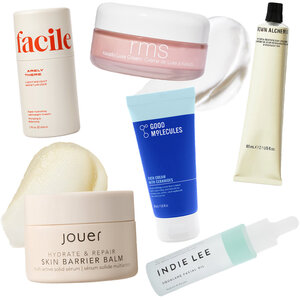
If you have oily or acne-prone skin, start with a moisturizer with both humectants and lightweight emollients for hydration without that heavy, greasy feeling. (Facile Barely There Hyaluronic Acid Lightweight Moisturizer and Indie Lee Squalane Facial Oil are both great choices for lightweight yet long-lasting hydration.)
For sensitive or barrier-stressed skin, reach for moisturizers with ceramide-rich emollients and gentle occlusives, like Good Molecules Rich Cream with Ceramides and Jouer Cosmetics Skin Barrier Balm.
If you have dry skin, layering tends to work best: an emollient for softness, a humectant for water, like Grown Alchemist Hydra-Restore Day Cream. A rich occlusive moisturizer (like RMS Beauty Kakadu Luxe Cream) is also best to lock in moisture while you rest.
Featured Products


You Might Also Like
-

Skincare
Acne Scars? Here’s How to Start Healing
-
Skincare
Basic Tips for Preventing Breakouts
-
Skincare
How to Treat Keratosis Pilaris (Those Scaly Red Bumps On Your Upper Arms!)
-

DIY
Cold Busters: Spa-Inspired Ways To Kill A Cold Fast
-

Skincare
5 Ways to Pamper Your Pits
-

Ingredient Spotlight
The Benefits of Pumpkin in Skin and Hair Care


